|
|
|

|
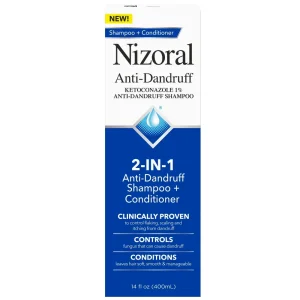
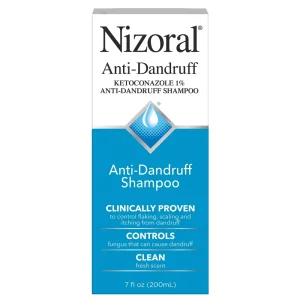
Nizoral AD
Shampoo
Shipping is a flat
rate of $6.99 in addition to the above prices
anywhere in the US. US orders only please. |
|
Nizoral
AD Shampoo
Doctors have known for a long time that
Nizoral shampoo, in prescription and
non-prescription strength, works well for
controlling dandruff. But at last yearīs
meeting of the American Academy of
Dermatology, a group of scientists
suggested that over-the-counter Nizoral
might also be useful as a hair loss
remedy. The researchers compared Nizoral
A-D Shampoo, containing 1% ketoconazole
(the active ingredient), to another
shampoo containing 1% zinc pyrithione.
Zinc pyrithione is the active ingredient
in dandruff shampoos such as Head &
Shoulders.
They found that Nizoral increased hair
thickness and decreased hair shedding,
whereas the zinc pyrithione shampoo had
the opposite effect.
Their presentation didnīt make a big
splash then, and it has faded into
obscurity since. Thatīs probably because
what they presented were the results of a
preliminary study--the results have not
yet been duplicated in other studies by
other researchers--and perhaps because the
scientists who did the research were under
the employ of McNeil pharmaceuticals, the
company that makes Nizoral.
Still, itīs not all flimflam. The study
met the basic standards of good research:
It was a randomized, double-blinded study.
That means the researchers used a random
process to decide who would use Nizoral
and who would use the zinc pyrithione
shampoo. |
Also, the study participants didnīt know
which shampoo they were using, and neither
did the researchers, until the results
were in. Both of these measures are
important in conducting a scientific study
because they help eliminate any bias the
researcher s or the study participants may
have, which could skew the results.
Here is how the study was done:
Forty-four men with "mild to moderate
dandruff and somewhat oily scalp" used
Nizoral A-D Shampoo two or three times a
week for six months, and 43 men with the
same scalp problems used a dandruff
shampoo containing zinc pyrithione just as
frequently over the same period of time.
Both shampoos had the same percentage (1%)
of the active ingredient in them.
At the beginning of the study, the
researchers looked at the health of the
menīs hair and scalp. They counted the
number of hairs growing on the scalp. They
also measured the diameter of the hairs,
and how many hairs fell out over a 24-hour
period. They took these measurements again
one month into the study, then again at
three months, and one last time at six
months.
The researchers found that the men using
Nizoral had about an 8% increase in the
thickness of their hair. The men using the
zinc pyrithione shampoo had no such
increase. In fact, their hair decreased in
thickness by about 2%. The men who used
Nizoral also shed fewer hairs over a
24-hour period than the zinc pyrithione
shampoo users did. The Nizoral users shed
about 16% fewer hairs, whereas the zinc
pyrithione users shed about 6% fewer
hairs.
The Nizoral users, however, had fewer
hairs growing on the scalp at the end of
six months than the zinc pyrithione users
did. That means fewer of their hair
follicles were in "anagen phase."
Not all the hair on your head grows at
once. At any given time, some hair
follicles are dormant, while others are
actively pushing out hair: Theyīre in the
anagen phase, which lasts about two to six
years. After a short transitional phase,
the dormant phase, or "telogen" phase
begins, lasting about five to six weeks.
When a follicle goes back into anagen
phase, the hair that had been growing from
it falls out, and a new hair begins to
grow.
In the study, both the Nizoral users and
the zinc pyrithione users had an increase
in the number of hairs in anagen phase.
The Nizoral group had about 6% more,
whereas the zinc pyrithione had about 8%
more.
These results may seem to prove that
Nizoral A-D works against hair loss, but
they really donīt: They merely suggest it.
Scientists might be able to get a better
idea of how well Nizoral works as a
hair-loss remedy if they were to do a
placebo-controlled study. That means one
group of people would use Nizoral A-D,
while another group would use a shampoo
that contains no medicine at all.
One 1998 study showed that
prescription-strength Nizoral, which
contains 2% ketoconazole, worked just as
well as minoxidil (brand name Rogaine) in
men with androgenic alopecia (male
hereditary balding). Both medicines
increased hair thickness and increased the
number of anagen-phase hair follicles on
the scalp. But the researchers were
guarded about the meaning of these
results, saying that more rigorous studies
on larger groups of men should be done.
The most certain results come from
placebo-controlled studies done in more
than one place, on groups of people that
fit a wider profile (not just men with
dandruff, in the case of the Nizoral A-D
study). This is whatīs known as the "gold
standard" for medical research--in
scientific terms, a randomized,
double-blinded, placebo-controlled,
multicenter study. This is the kind of
study that the US Food and Drug
Administration wants to see before it will
approve a medicine for a particular use. |
|
|
|
|
|
 |
|
|